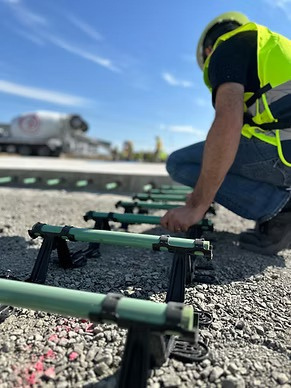
Epoxy-coated dowel bars are strategic load-transfer elements designed to transfer vertical and horizontal loads between concrete slabs.
These components preserve structural integrity by preventing relative movement and differential deformation between adjacent concrete blocks.
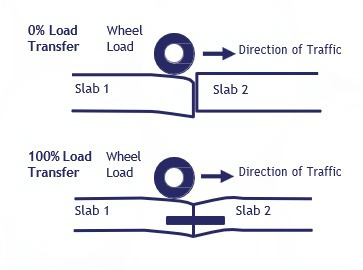
Through the use of epoxy-coated dowel bars, the weight of moving loads is effectively shared between adjacent slabs, ensuring a balanced load distribution. Epoxy-coated dowel bars are widely used in high-performance applications such as airport runways, aprons, motorways and industrial concrete pavements, where durability and long-term performance are of critical importance.
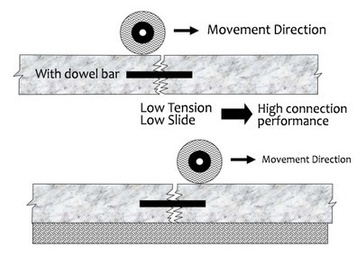
These bars, positioned at the joint locations, allow the concrete slabs to move in a controlled manner whilst efficiently transferring loads between the joints. This mechanism distributes stresses evenly across the subgrade and prevents pressure from concentrating at a single point.
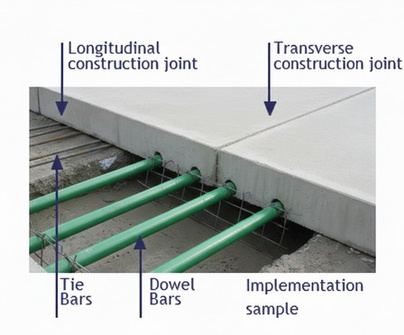
By ensuring an even load distribution, potential defects such as settlement, cracking, fault formation and surface deterioration are significantly reduced. The epoxy coating provides superior corrosion
resistance, thereby extending the service life of the anchor rods, particularly in aggressive environmental conditions.
Epoxy-coated dowels are manufactured in various diameters and lengths in accordance with technical specifications and international standards, and are customised to meet specific project requirements.
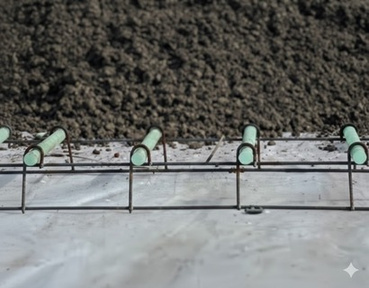
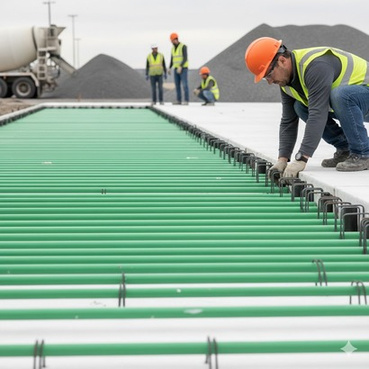
Before the concrete is poured, the positions of the tie bars are determined in line with the joint cutting lines. The tie bars are then precisely positioned at these designated points; the concrete is subsequently poured and the installation is completed. This system enhances joint performance, extends the service life of the road surface and reduces long-term maintenance requirements.
When properly designed and installed, tie-bar systems significantly enhance the structural performance and service life of concrete pavements. By ensuring effective load transfer across joints, tie-bars prevent differential settlement, slippage and cracking between adjacent concrete slabs. Consequently, the paving system operates more efficiently under repeated traffic loads and maintains its structural stability. In heavy-duty applications such as airport runways, motorways and industrial concrete floors, the use of dowel bars is vital for preserving the integrity of the paving. By transferring loads to adjacent slabs, they prevent stress concentration on a single slab and ensure that forces are distributed more evenly across the sub-base.
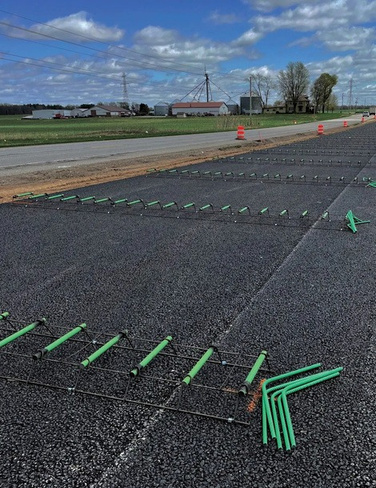
High-quality reinforcement bars, manufactured in accordance with technical standards, reduce maintenance requirements, minimise the risk of deformation and ensure long-term durability. Consequently, these bars form an indispensable component of sustainable, high-performance concrete paving systems.
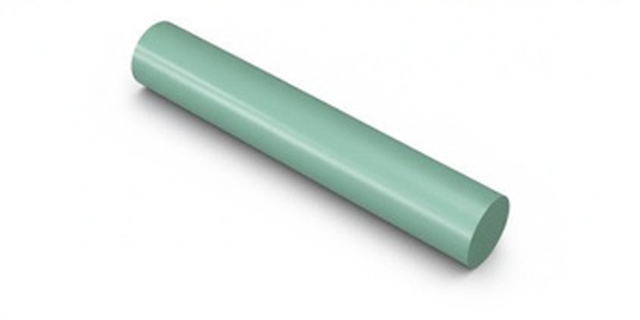
In the United States and Europe, the use of epoxy-coated anchors manufactured in accordance with ASTM standards is specified as a standard requirement in the technical specifications drawn up for airports and motorways.
Epoxy-coated anchors are manufactured from rolled carbon steel billets designed to meet the required tensile and yield strength values, in full compliance with the ASTM A615/A615M, ASTM A675/A675M, ASTM A706/A706M and ASTM A1035/A1035M standards.
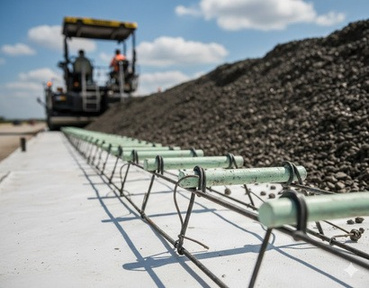
The surfaces and tips of the dowels are precision-cut in accordance with the ASTM A775/A775M standard and coated with epoxy. This epoxy coating provides corrosion protection, ensuring long-term durability and performance even in harsh environmental conditions.
Every stage of the production process is meticulously monitored and inspected as part of our quality control systems; detailed reports are provided to the customer along with the products.
Epoxy-coated anchors are suitable not only for new construction projects but also for strengthening and improving the structural performance of existing concrete surfaces.
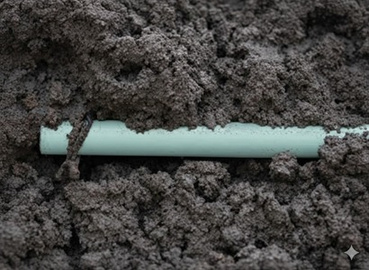
The diameters of epoxy-coated wall plugs can be customised to meet customer requirements. However, standard production diameters are generally 12, 16, 20, 25, 30, 40, 50, 60, 70 and 75 mm; their lengths range from 400 to 800 mm.
Once production is complete, care is taken when packaging the epoxy-coated dowels in order to optimise both time and cost efficiency. The products are generally securely packed onto wooden pallets in accordance with international standards for sea, road and container transport, and are protected with PVC covers to ensure their safety during transit.
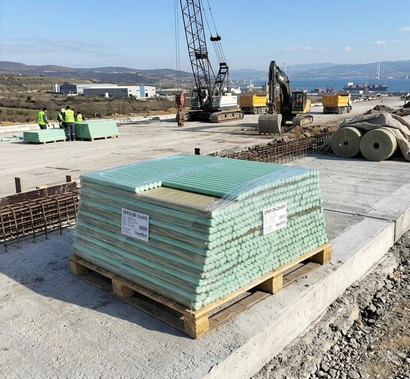
Each anchor rod can be individually placed in matt PE tubes that comply with the ASTM A775/A775M standards. This packaging method ensures that the anchor rods are delivered undamaged and meet strict European quality requirements.
Furthermore, packaging can be customised to meet specific project requirements, thereby offering bespoke solutions that cater to unique logistics and transport needs.
Why Are Dowel Rods Coated with Epoxy Paint?
Anchors are coated with epoxy paint, primarily to prevent corrosion caused by the highly alkaline environment within the concrete. The pH level of concrete, which measures its acidity or alkalinity, typically forms a passive oxide layer that protects embedded steel surfaces against corrosion. However, the presence of chloride ions – introduced via rainwater, seawater or de-icing salts – lowers the pH level and triggers corrosion, thereby weakening this protective layer.
When chloride ions penetrate the concrete and disrupt the passive oxide layer, cracks and deterioration occur on the surface. These cracks accelerate the corrosion of the steel reinforcement bars and lead to internal stresses within the concrete due to volumetric expansion. This process exacerbates structural damage, causing deformation and material failure not only internally but also on the surface of the concrete. Epoxy coating acts as both a physical and electrochemical barrier, effectively isolating the steel from corrosive elements. This protective layer prevents corrosion with an efficacy rate of approximately 98 per cent, thereby significantly extending the service life of the bars and enhancing the overall durability of the concrete cover.
What is the life-cycle cost-benefit analysis of an epoxy coating applied to dowels?
Choosing not to use epoxy-coated reinforcements in order to reduce initial project costs during construction constitutes a serious oversight. Material degradation caused by corrosion results in significant direct and indirect costs throughout the structure’s service life.
Although epoxy coating increases the initial project cost by approximately 3.7 per cent per square metre, life-cycle cost analyses clearly demonstrate the financial benefits of this coating. Over a 50-year period, the reduction in maintenance, repair and early replacement costs more than offsets the initial investment cost; this results in significant long-term savings and enhanced structural reliability.
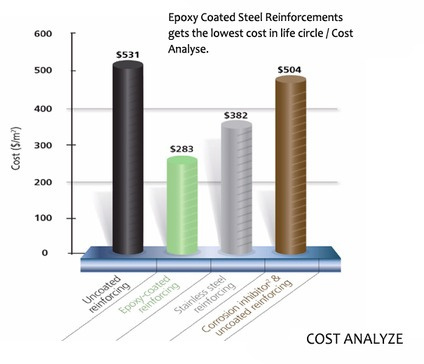
| SYSTEM | TIME OF CORROSION ONSET (YEARS) | TIME TAKEN FOR CONCRETE TO CRACK AFTER CORROSION BEGINS (YEARS) | INITIAL CONCRETE REPAIR PERIOD (YEARS) | INITIAL CONCRETE POURING COST (USD/m²) | LIFE CYCLE COST (USD/m²) |
|---|---|---|---|---|---|
| UNCOATED STEEL REINFORCEMENT | 2.2 | 6.8 | 14 | 226 | 531 |
| EPOXY-COATED REINFORCED STEEL REINFORCEMENT | 20 | 25 | 50 | 234 | 282 |
| UNCOATED STEEL REINFORCEMENT CONTAINING A CORROSION INHIBITOR | 4-6 | 7 | 16-18 | 232 | 504 |
What is the purpose of epoxy-coated dowel bars?
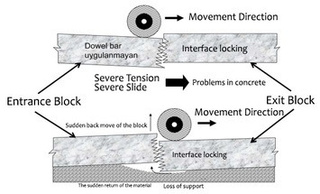
The use of epoxy-coated anchors is particularly important in the construction of concrete roads and airports, which are subjected to heavy loads and pressure. If there is no supporting force within such concrete structures, deformations, subsidence and fractures may occur over time.
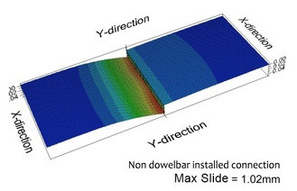
However, this type of damage can be effectively prevented by using epoxy-coated dowel bars installed beneath concrete pavements. The superior load-transferring capacity of the dowel bars ensures a strong mechanical bond between concrete slabs. Consequently, traffic loads are distributed evenly throughout the entire road surface structure, regardless of the load concentration at any given point, thereby preventing differential settlement, cracking and other types of damage.
How Are Practical Projects Using Dowel Bars Carried Out?
Installations of epoxy-coated dowel rods are generally carried out using one of three main methods:
1. Pre-construction Installation: During the planning stage of a concrete paving project, the positions of the tie bars are determined using the trestling method. The tie bars are positioned accordingly, and concrete is then poured over them.
2. Machine-assisted placement: The bars are pre-fitted to specialised equipment that places them at designated points simultaneously with the concrete pour.
3. Refurbishment of Existing Coatings: Epoxy-coated tie bars can also be retrofitted to existing concrete coatings. This process involves drilling or cutting into hardened concrete slabs at specific points, followed by the installation of tie bars to reinforce and restore structural integrity.