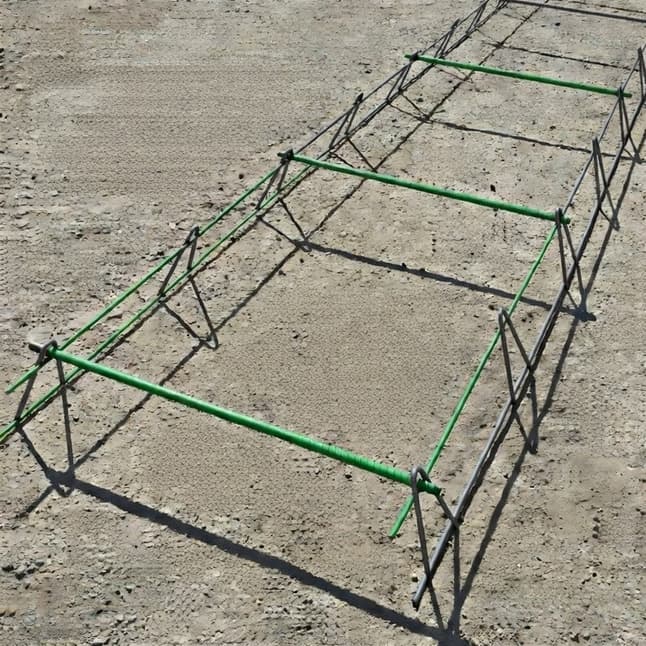
Epoxy-Coated Tie Bars are shaped steel reinforcement elements used in rigid concrete paving systems to maintain the integrity of transverse joints and prevent lateral separation of adjacent concrete slabs. Unlike dowel bars, which are primarily designed to transfer loads across joints, tie bars are designed to resist tensile forces and control the joint gap between slabs.
Reinforcing bars are laid parallel to the slab surface in accordance with the spacing, diameter and embedment depth specified in the structural design. Design parameters are determined based on traffic load classification, slab thickness, concrete strength, sub-base characteristics, environmental exposure conditions and joint configuration. Correct alignment and adequate bonding with the surrounding concrete are vital to ensuring structural performance.
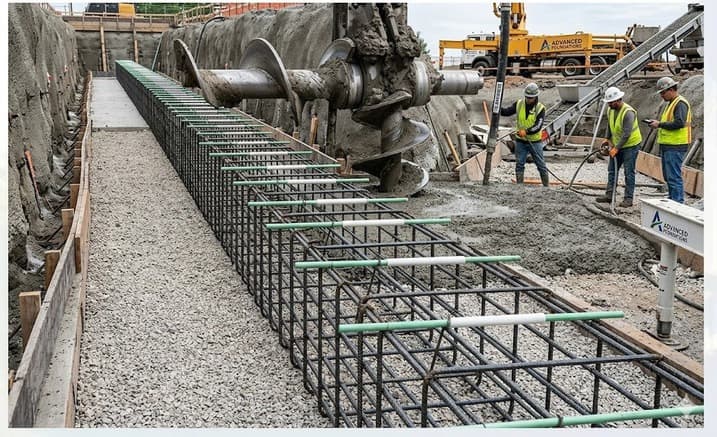
After the concrete has been poured, the epoxy-coated tie bars move as a single unit with the floor slab and contribute to the following:
• Limiting joint expansion
• Monitoring transverse cracking
• Reducing edge cracking under heavy traffic loads
• Improving the long-term performance of road surfacing
These bars are of particular importance in concrete road surfaces subjected to heavy loads, such as motorways, airport runways, taxiways and industrial sites.
Corrosion Protection and Epoxy Coating
Epoksi Kaplamalı Bağlantı Çubukları, kaplama kalınlığı, yapışma gereklilikleri, esneklik, süreklilik ve hasar denetimi kriterlerini belirleyen ASTM A 775/775M standardına uygun olarak kaplanmıştır.
Steel reinforcement embedded in concrete may, over time, be exposed to the following:
• Carbonation
• Chloride ion penetration (de-icing salts, marine environments)
• Exposure to moisture and aggressive chemicals
These factors can lead to corrosion in unprotected steel. Corrosion products expand in volume, creating internal tensile stresses within the concrete cover, which in turn can lead to the following:
• Surface cracks
• Concrete spalling
• Reduction in structural capacity
Epoxy coating significantly reduces the risk of corrosion by forming a protective barrier between the steel substrate and aggressive environmental factors, thereby extending the service life of the infrastructure.
Production Standards
Epoxy-coated tie rods are manufactured in accordance with the following standards:
• ASTM A615 – Deformed and plain carbon steel bars for concrete reinforcement
• ASTM A706 – Low-alloy steel shaped bars for concrete reinforcement (weldable grade)
These standards specify mechanical properties such as yield strength, tensile strength, elongation and chemical composition limits. Following the coating process, quality control procedures are carried out to verify the coating thickness, continuity, adhesion performance and the absence of surface damage.
Principles of Design and Implementation
The key considerations to bear in mind when designing connecting rods are as follows:
• Bar diameter and cross-sectional area
• Development length (embedded length)
• The distance between the joints
• Concrete coating thickness
• Traffic load category
Inadequate design, incorrect spacing or faulty laying can lead to premature joint separation and a decline in the performance of the road surface.
When correctly designed and installed, epoxy-coated tie rods:
• Maintains structural continuity
• Reduces the frequency of maintenance
• Increases durability under cyclic loading
• Reduces life-cycle costs over a 50-year service life.
Dimensions of Connecting Rods
The diameter, length and installation spacing of the connecting bars vary according to national standards and project-specific road surfacing design requirements. These parameters are determined on the basis of structural calculations, the traffic load class and the pavement geometry.
Typical Sizes
The nominal diameters commonly used in some countries are as follows:
• Austria: 14 mm
• Germany: 20 mm
• USA: 12.5 mm and 16 mm
The selected diameter is determined by taking into account the tensile force required at the longitudinal joints.
Typical Lengths
• Austria: 700 mm
• Germany: 800 mm
• USA: 760 mm
The total bar length is determined so as to provide sufficient embedment length to ensure adequate bond performance within the concrete.
Assembly and Installation
The spacing of epoxy-coated tie rods is specified in the approved project design and must be installed in accordance with this. Incorrect positioning may obstruct the dowel rods and adversely affect joint performance.
Incorrect installation, incorrect spacing or failure to comply with project specifications may lead to a reduction in joint retention capacity, cracking or localised concrete damage.
For this reason, epoxy-coated tie rods must be installed in strict accordance with the relevant project design and technical specifications.